Tasting wines in different regions of the world helps us become more knowledgeable, develop our taste and broaden our palate. This year we decided to explore some of the wines of central Italy. We started on the Amalfi coast south of Napoli, moved on to Tuscany, and ended in the north at Cinque Terre.
The Amalfi Coast
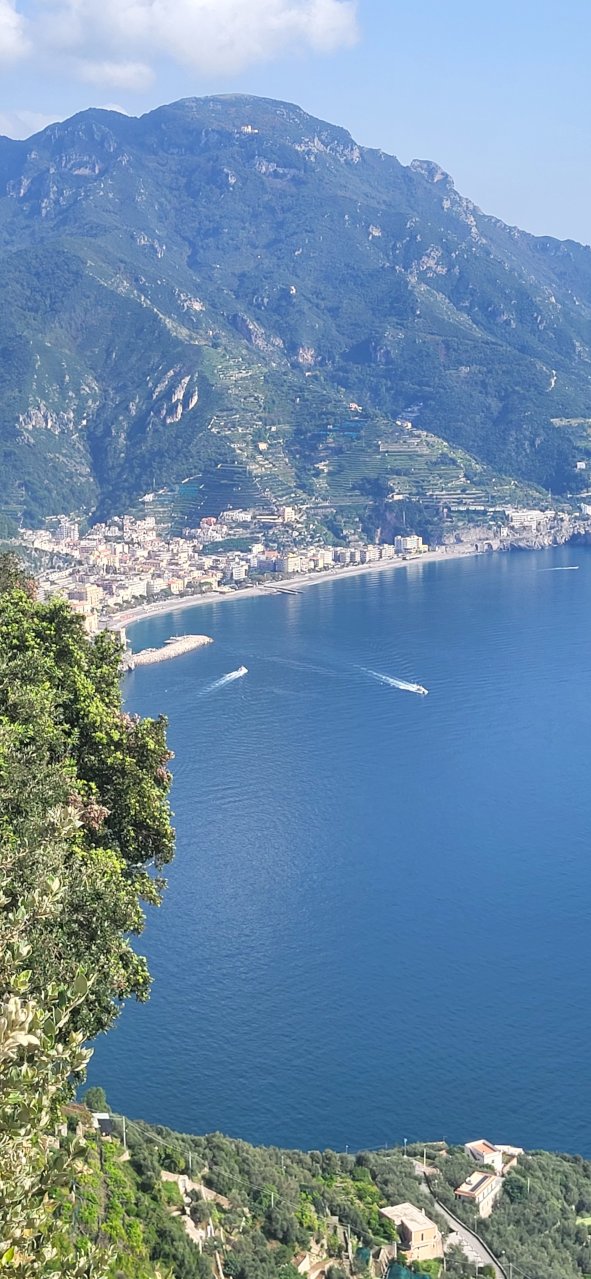
After visiting the typical sites of Roma that everyone visits, we drove south about two hours past Napoli and over the mountains to the Amalfi coast. This area is one of the most popular coastal areas in Italy. It is known for its very narrow roads on cliffs high above the Mediterranean Sea, and for its lemons, from which the famous limoncello is made. We were headed to the little town of Ravello, where we planned to stay a few days.
As we came around a corner on the narrow road we saw the pressings from red wine and some wine tanks, and realized we had just discovered our first winery. The area is so steep that part of the winery sticks out into the road. The surrounding hills are covered with terraces, most of them planted with the famous Amalfi lemon and a few with wine grapes. It was difficult finding a place to park since the road was so narrow, but eventually we succeeded and visited the Gran Caruso winery.
We tasted several reds before buying a bottle of 2022 Ravello Rosso. It is made from two dark red local grapes, Piedirosso and Aglianico. Piedirosso is grown only on the Amalfi coast, while Aglianico is grown more widely in Campania. The wines tasted unusual; they are quite different from the more common Cabernet, Syrah and Merlot that so many wineries in the USA make. It was amazing to sip wine by the side of the road with the sea a thousand feet below lapping at the cliffs. We hoped to visit more wineries, but most of them were on the other side of the mountains toward Napoli and we never found any more along the coast.
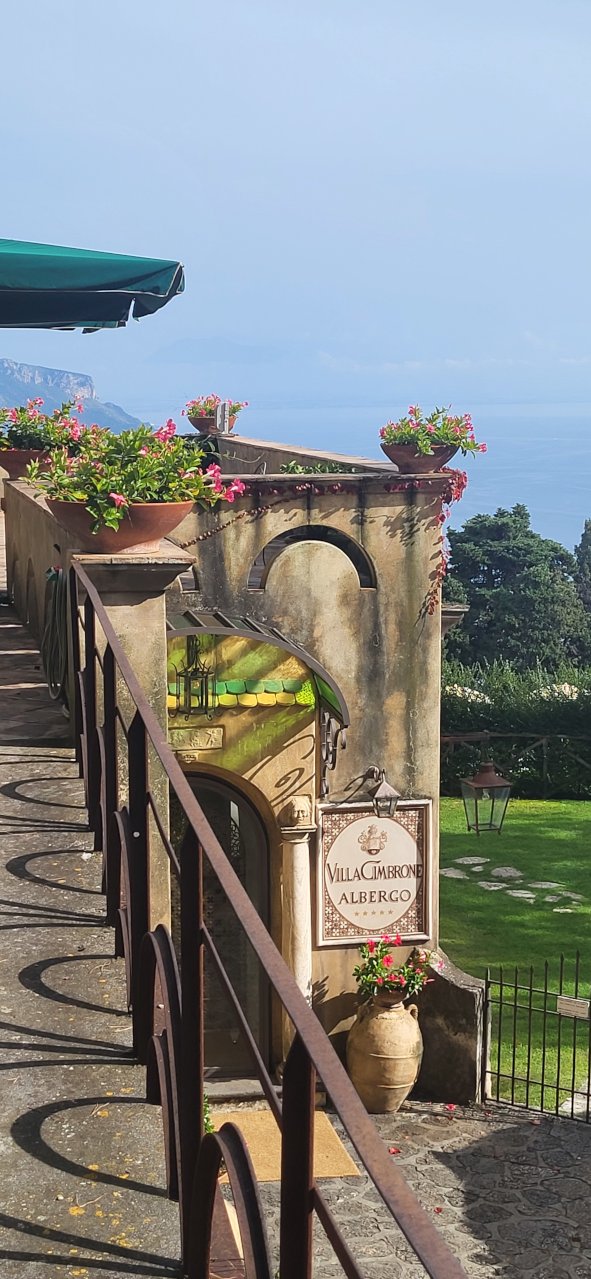
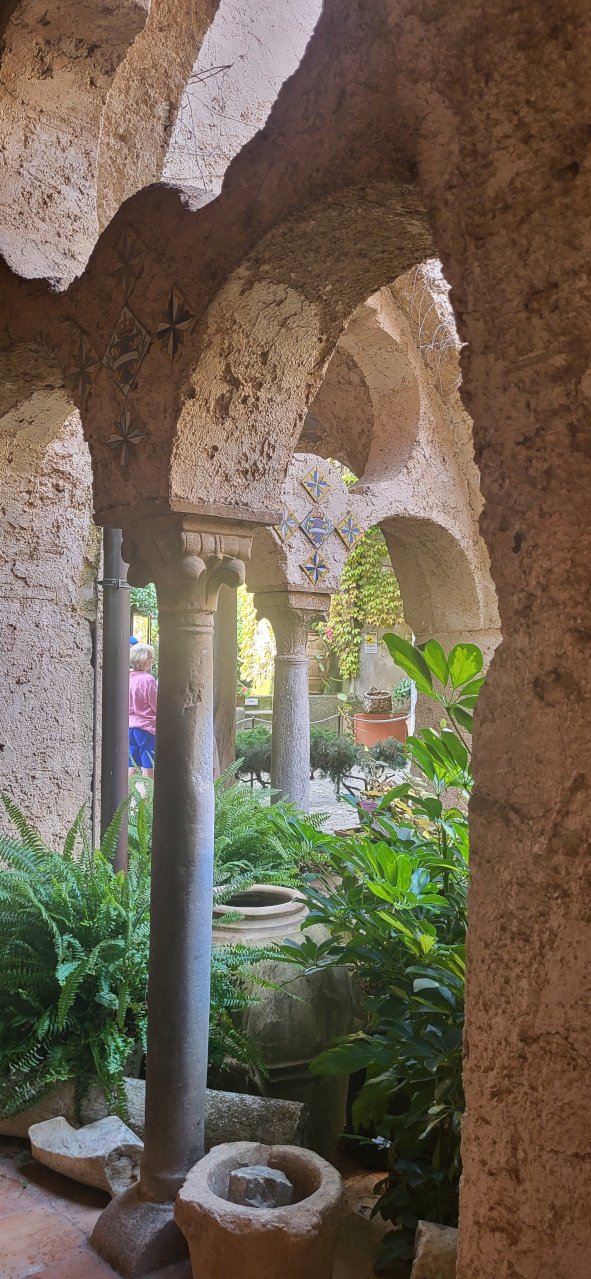
We visited the famous Villa Cimbrone and marveled at the architecture, the gardens and the amazing view from the Terrace of Infinity. We also had breakfasts and dinners on our own little terrace at the small B&B where we stayed.
Montepulciano
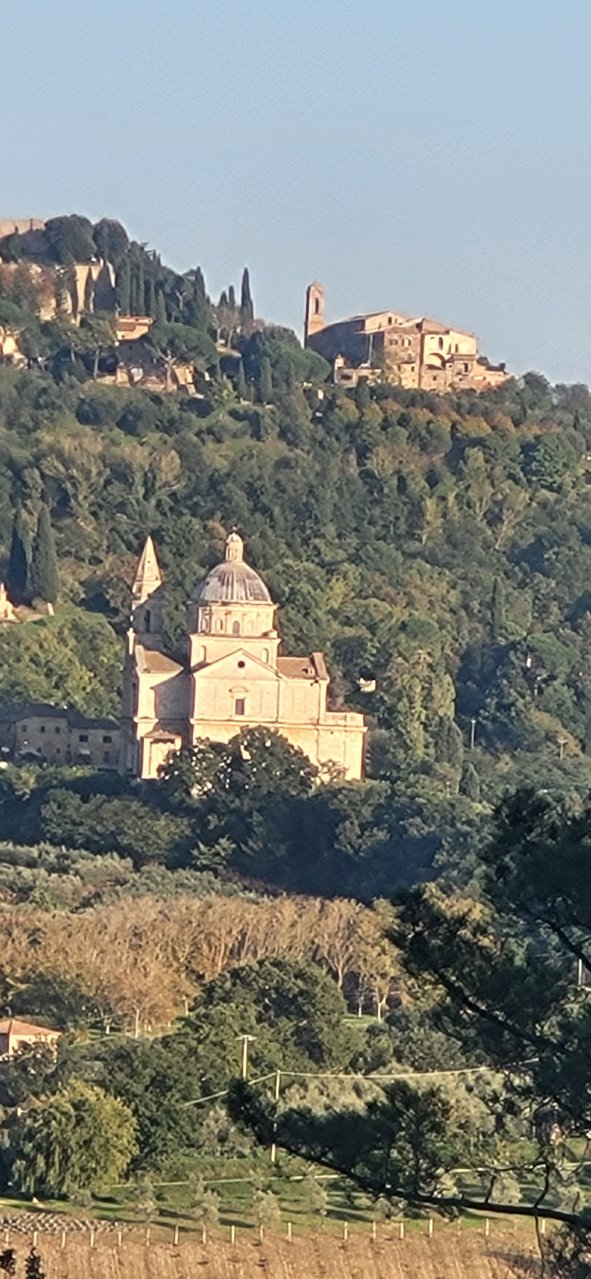
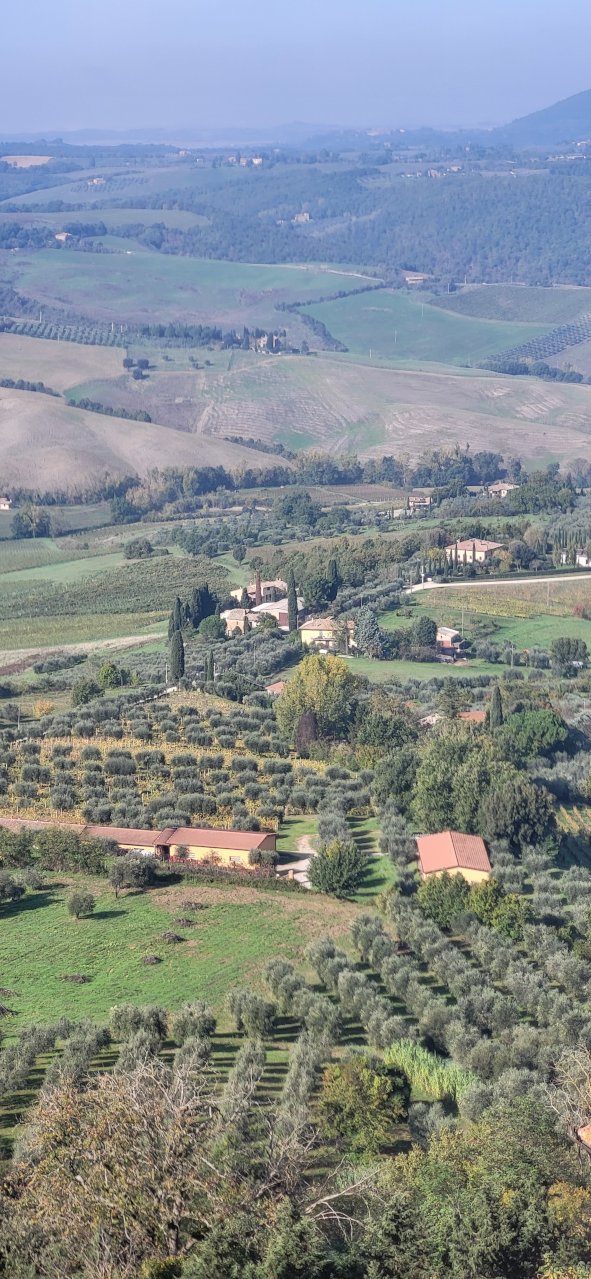
We then drove back north past Sorrento, Pompeii and Rome to the village of Montepulciano in Tuscany, where we stayed for a few days. We rented an apartment in town, went to the local grocery store and bought food for dinner.
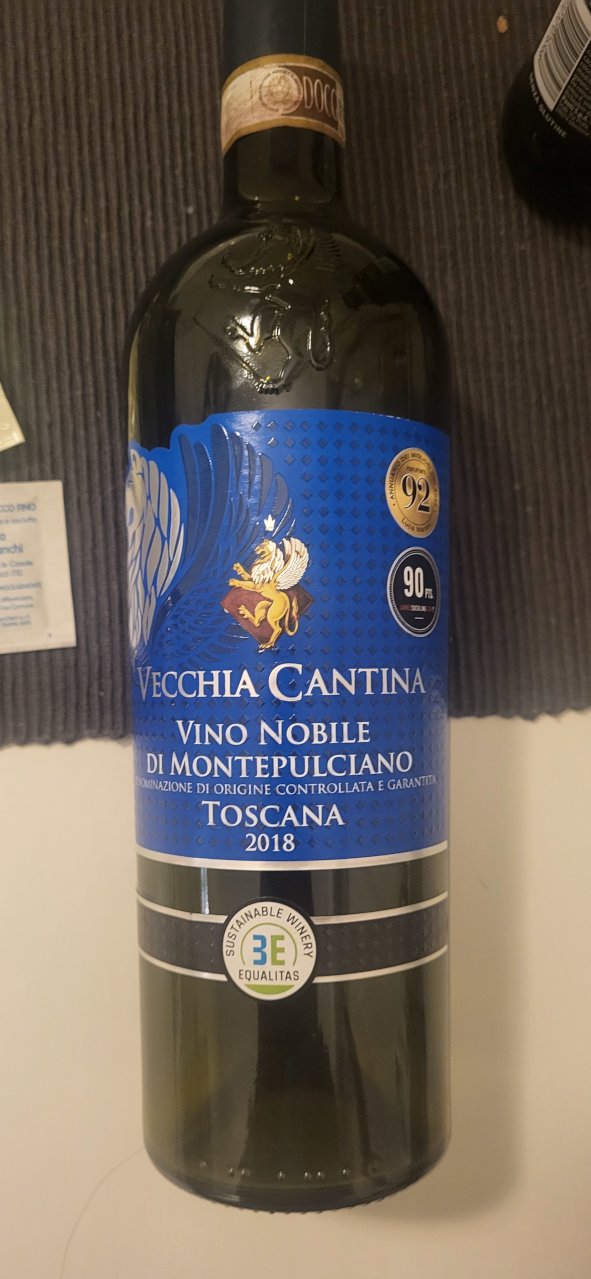
I found a bottle of 2018 Vecchia Cantina Nobile di Montepulciano for 9.5 euros and took a chance. It ended up being the nicest wine we tasted. It is 80% Sangiovese, with the rest made up of Canaiolo, a local grape. It was medium to full bodied with nice fruit, and so good that we went back the next day and bought two more bottles. It is aged for 20 months in small oak barrels, then for 11 months in the bottle before being released. It is made at a very large wine co-op just outside Montepulciano that has 400 members. This wine is actually available in the USA for about $20. Get it if you can.
A word about Vino Nobile di Montepulciano
Most of the wines in Chianti and the surrounding area are made from Sangiovese. It is tough to make a really great wine from 100% Sangiovese, but Brunello di Montalcino is an exception. A number of years ago some enterprising vintners started blending it with other grapes, such as Cabernet Sauvignon, Merlot, Cabernet Franc and Syrah, to create a more full-bodied wine. The resulting wines sold better and the Nobile designation was applied.
These wines are part of the “Super Tuscans”, which include other areas in Tuscany that blend other grapes with Sangiovese. The blends are more full bodied than regular Sangiovese and generally have much more complexity and depth than traditional Chianti.
Montalcino: Patrizia Cencioni
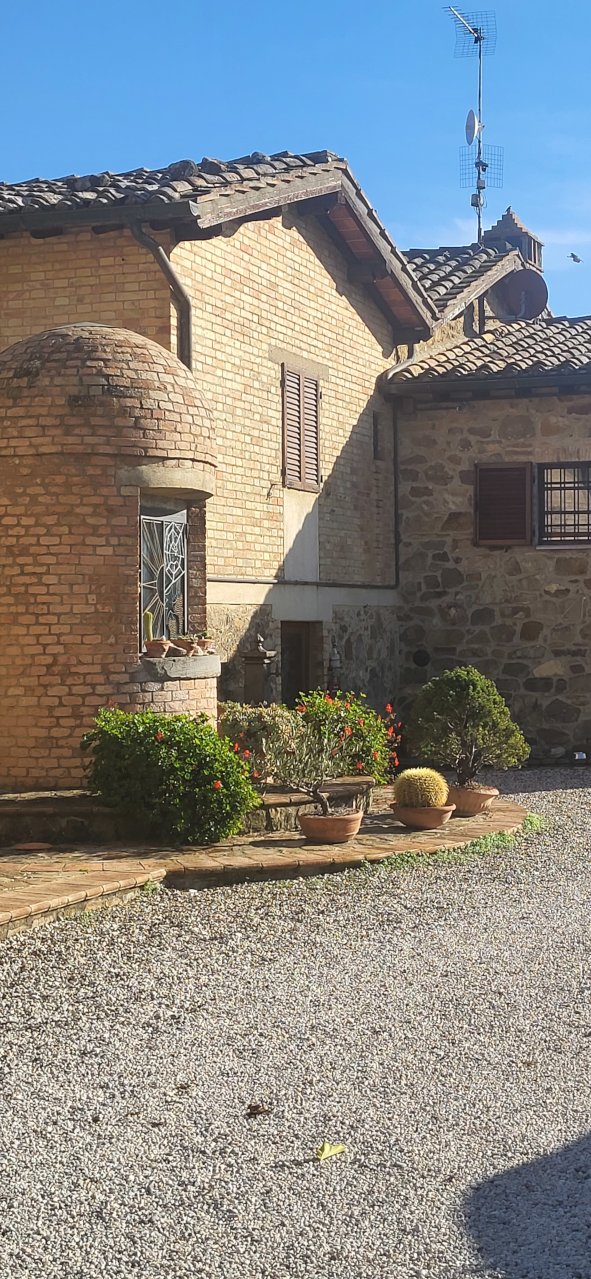
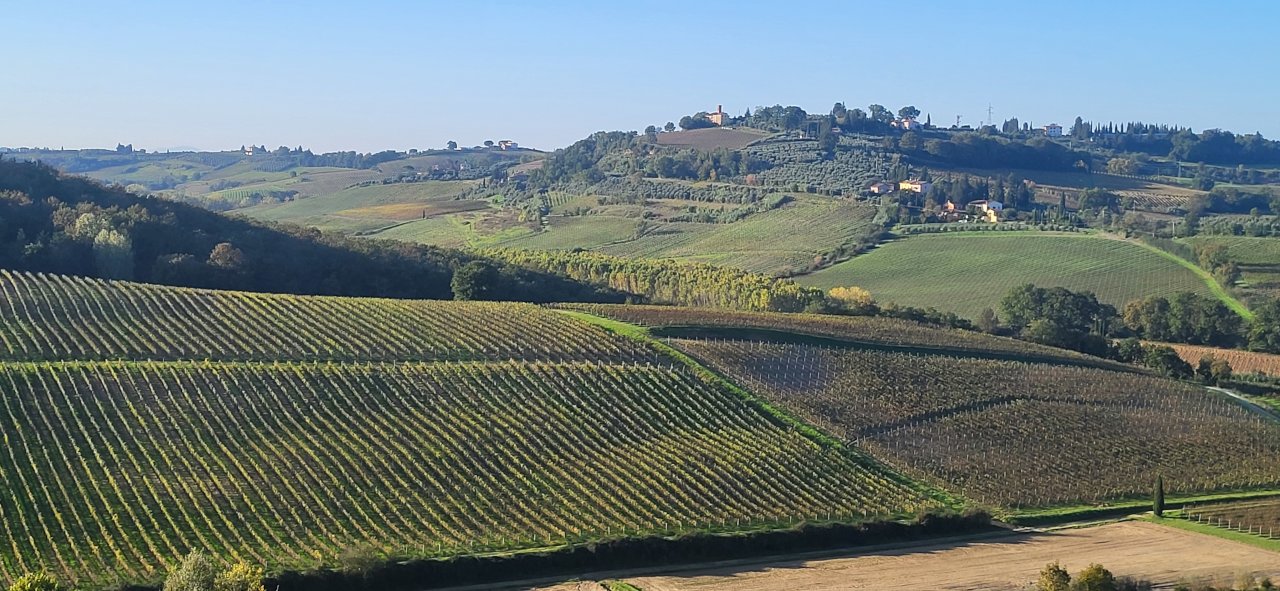
The next day we took a drive toward Montalcino. The Tuscan countryside was beautiful and there were a lot of newly worked fallow fields. Wheat is raised in these fields, and we learned that Tuscany actually raises more wheat than grapes. We drove on very narrow, uncrowded country roads and enjoyed the rural countryside.
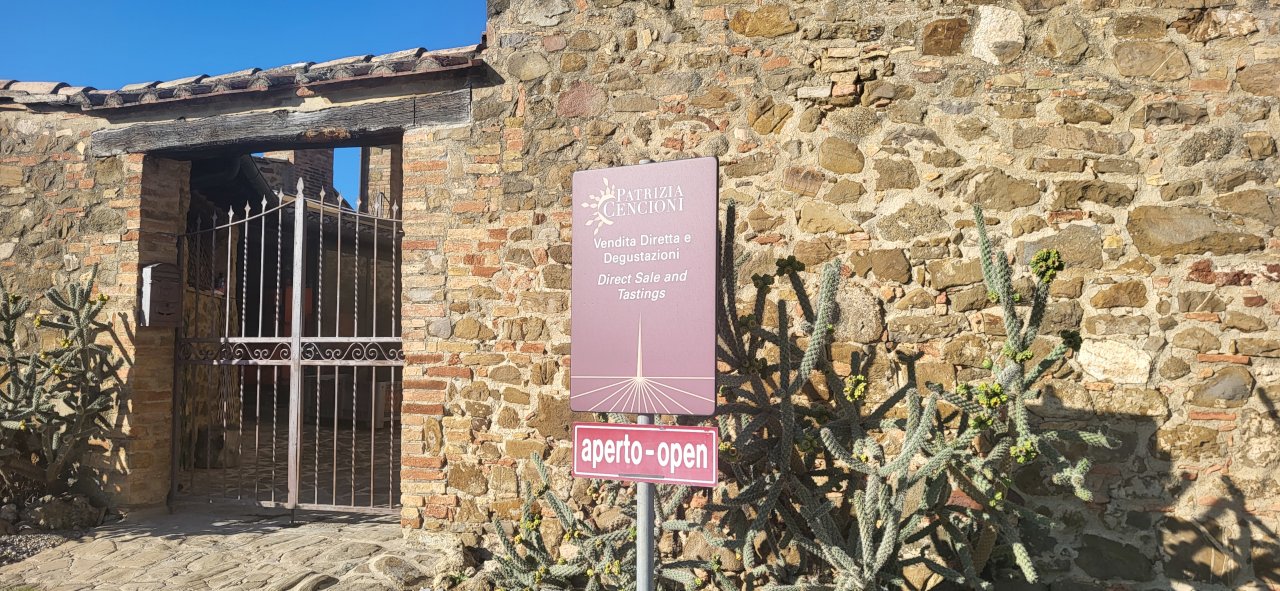
We arrived in Montalcino and found a winery with a sign that said “wine tasting, direct sales” in Italian and English. Most wineries in Tuscany want you to make a reservation several days in advance, and the tasting includes a tour, snacks and a hefty price tag. We like to be more spontaneous and stop when we want. The wineries that offer direct sales let walk-ins taste and buy without all the formality of a tour and food.
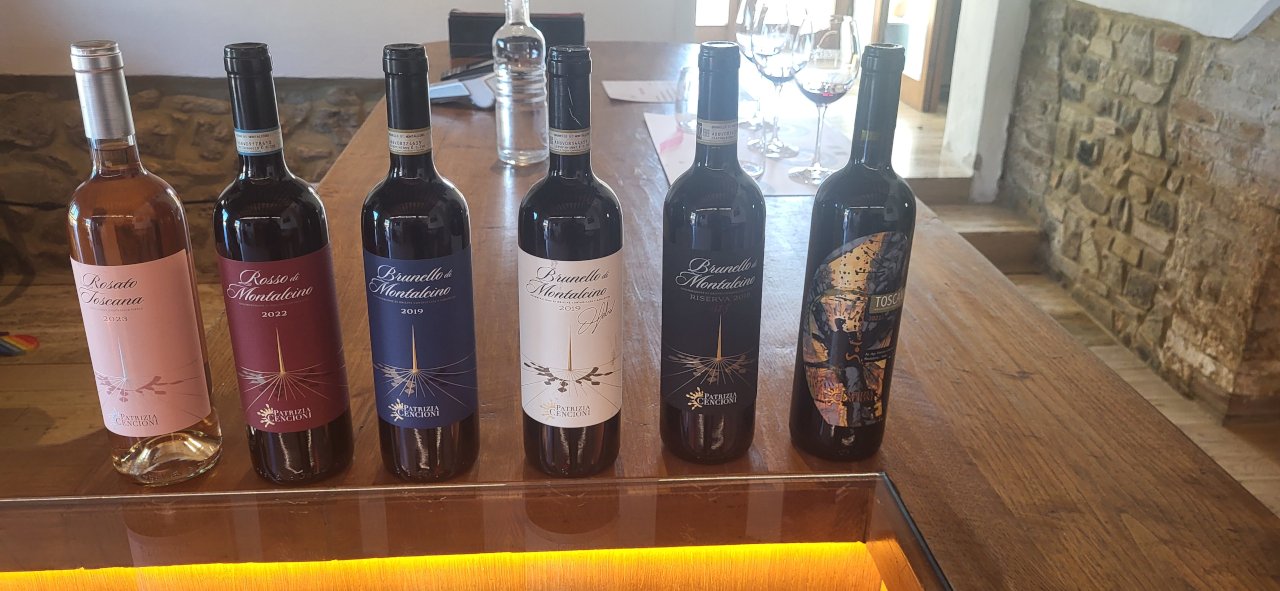
Just outside Montalcino we stopped at Patrizia Cencioni and tasted their wonderful reds. Brunello di Montalcino is considered one of the best wine districts in Italy and commands a hefty price: two to three times the cost of a Nobile di Montepulciano. The winery is run by Patrizia and her two daughters. We tasted the reds and chose a bottle of their 2021 “Solarianne”, a blend of 50% Sangiovese and 50% Cabernet Sauvignon, for 26 euros. The Brunello di Montalcino was really good, but I could not justify 42 euros, or 82 euros for a bottle of the reserve.
Palazzo Massaini
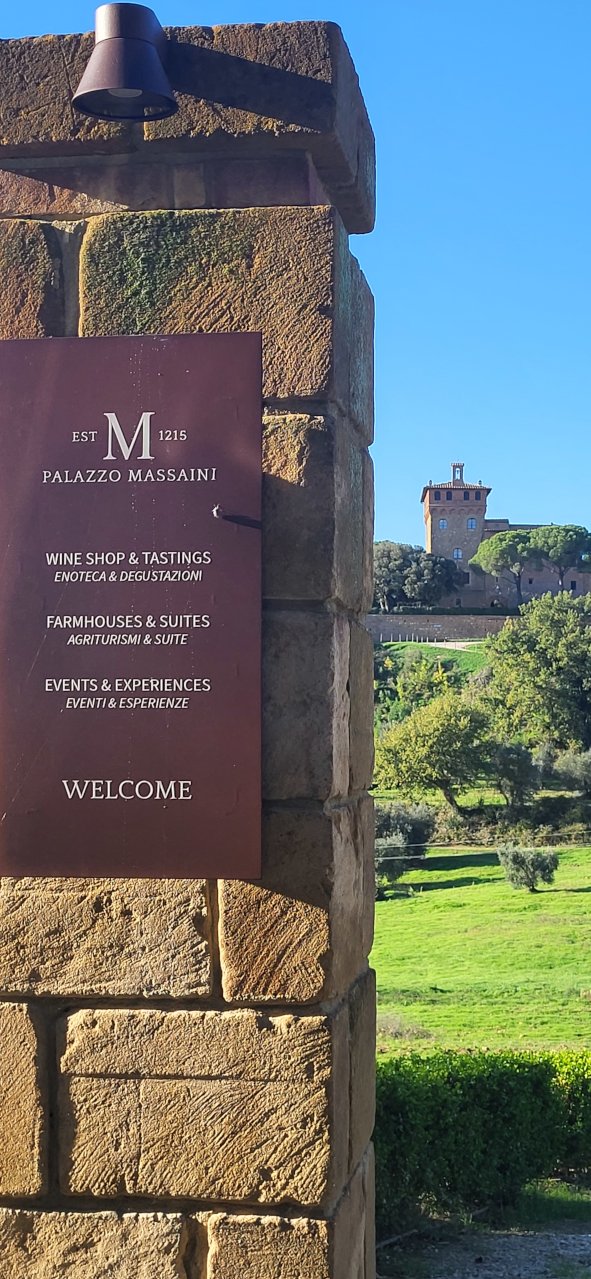
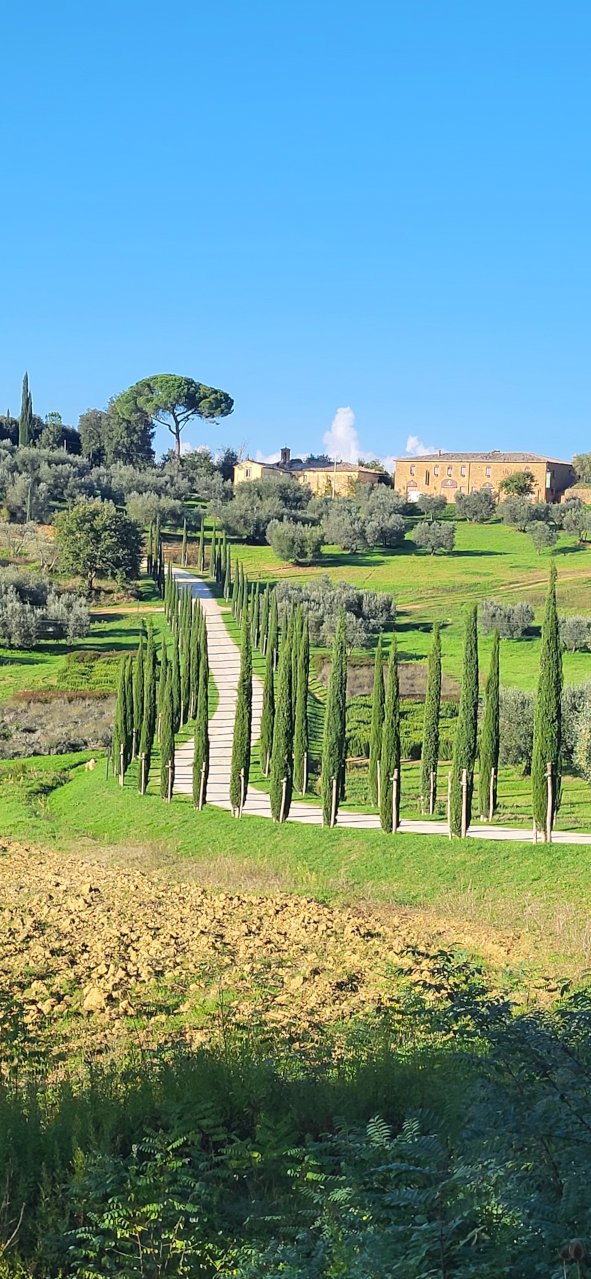
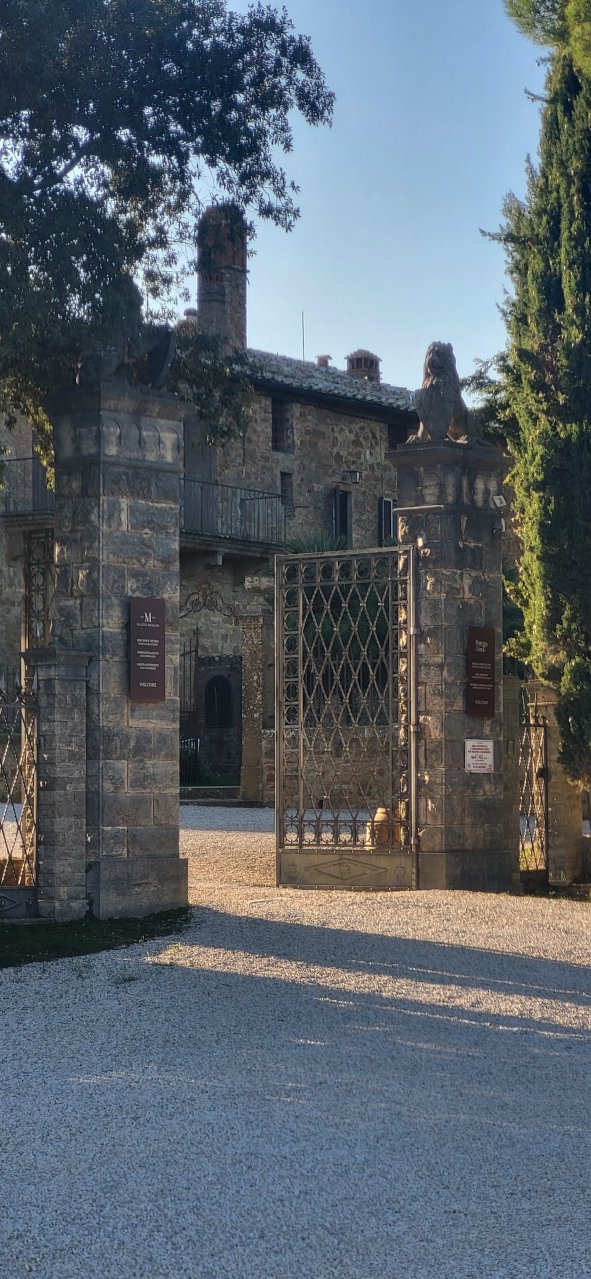
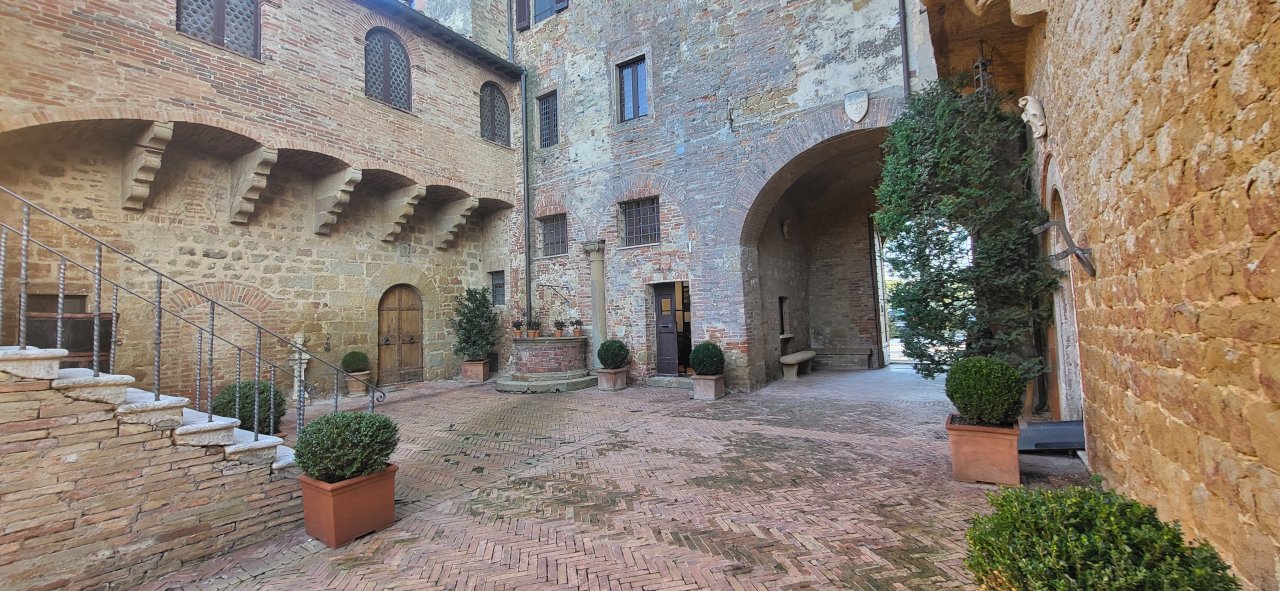
About midway between Montalcino and Montepulciano, in the heart of the Orcia valley, is Palazzo Massaini. It has 13 hectares of vines and 15 hectares of olive trees, hosts farm stays and is an event center. This was the most picturesque winery we visited.
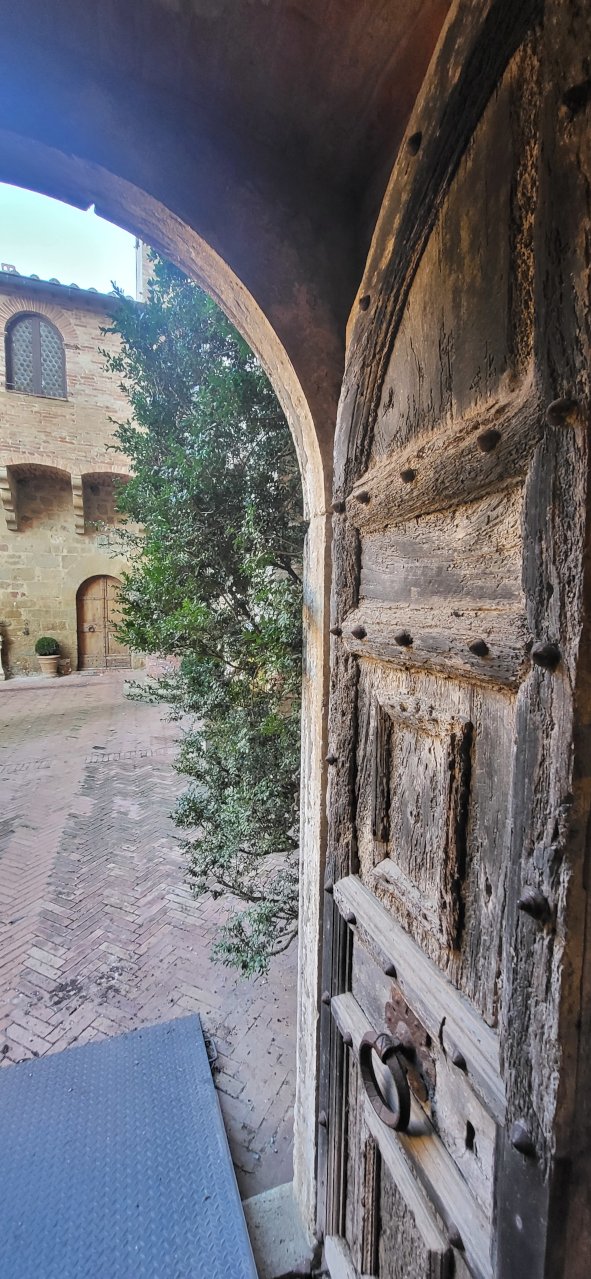
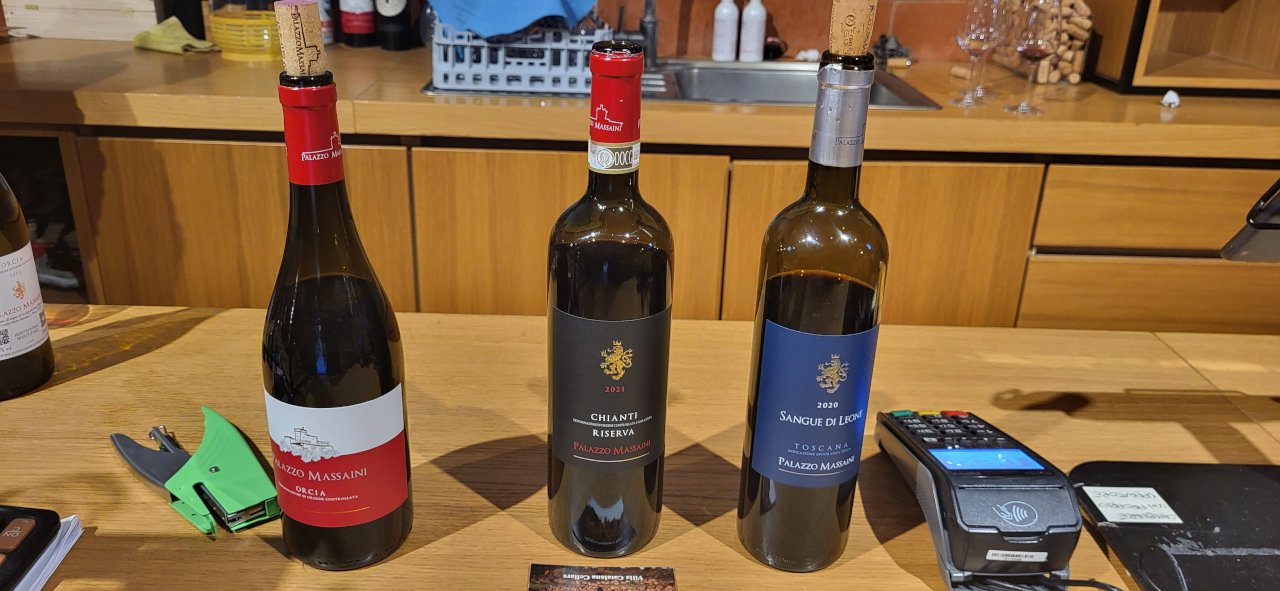
The long driveway lined with Italian cypress leads to many stone buildings dating from 1215. We wandered around the beautiful medieval buildings and found the tasting room, where we tasted three reds.
We bought their 2020 Chianti Riserva, which was fermented in concrete tanks, aged for two years in French oak and then bottle aged for 6 months before being released. It is 100% Sangiovese. It was hard to tear ourselves away from this incredible place.
Casa Vinicola Triacca
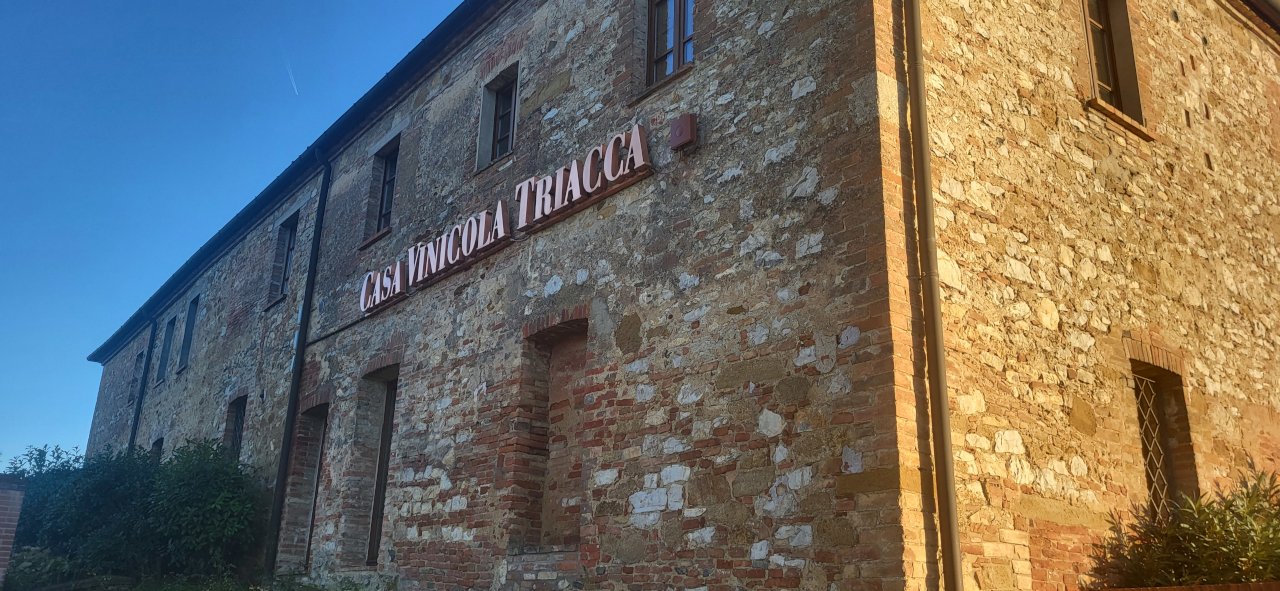
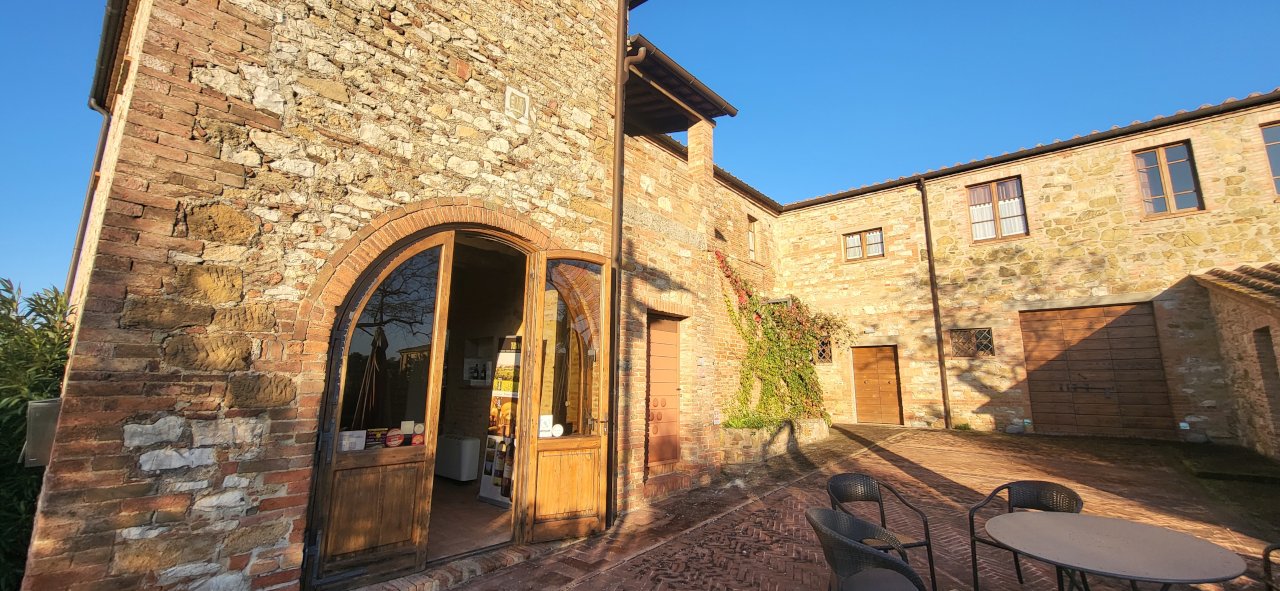
Near Montepulciano is Casa Vinicola Triacca and the Santavenere vineyard. The winery was started in northern Italy in 1897 and has been in the family for four generations. The Triacca family expanded and eventually added vineyards in Chianti and Montepulciano.
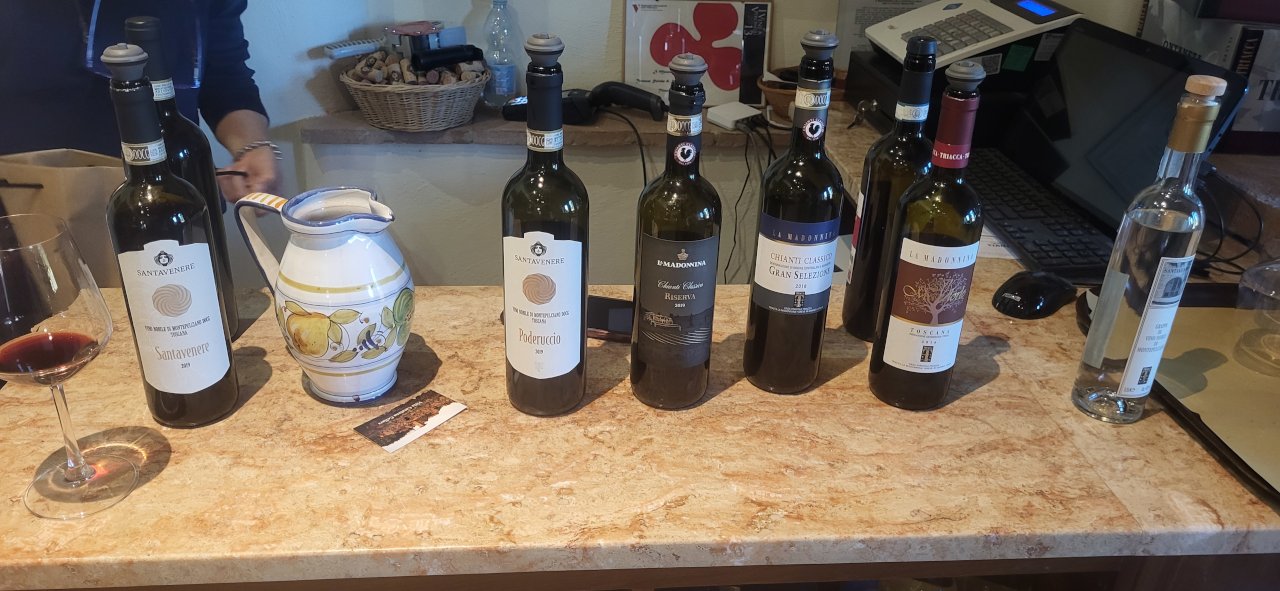
The tasting room offered wines from Chianti and Montepulciano, and we were able to taste four big reds. It was a hard choice, but we settled on a 2019 Poderuccio Vino Nobile di Montepulciano, which is 100% Sangiovese. This wine won a gold medal at the AWC Vienna and 94 points from The Wine Critic. They focus on sales to Switzerland, other European countries and locally. It was heartwarming that this winery has been a successful family business for over 125 years.
Tenuta Torciano, San Gimignano
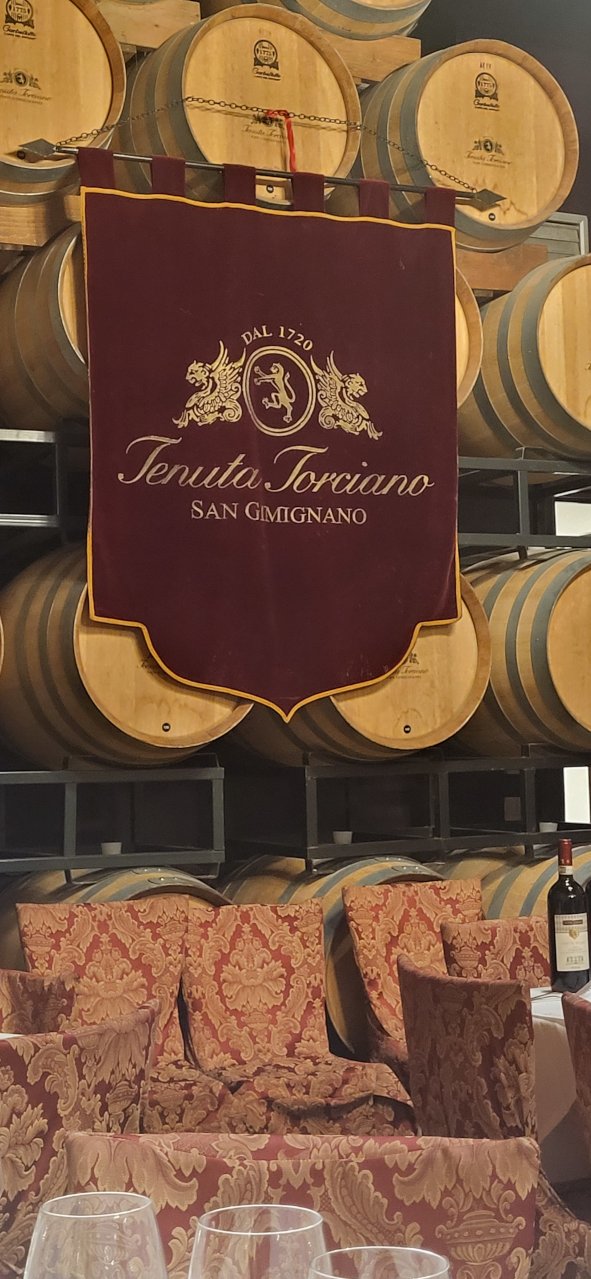
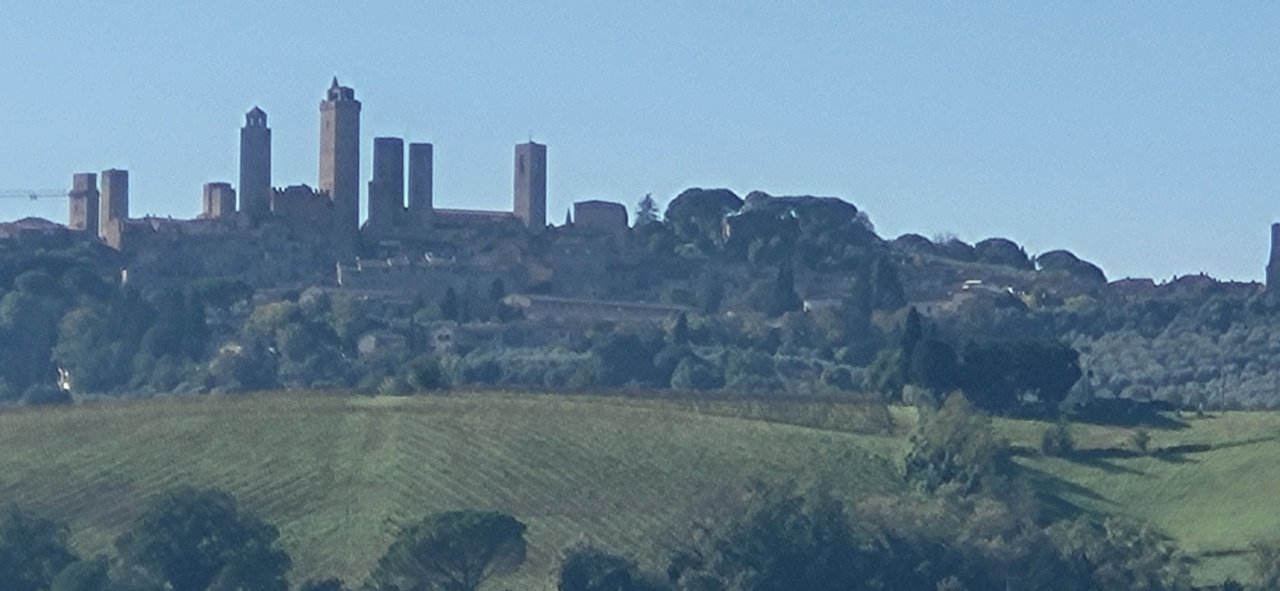
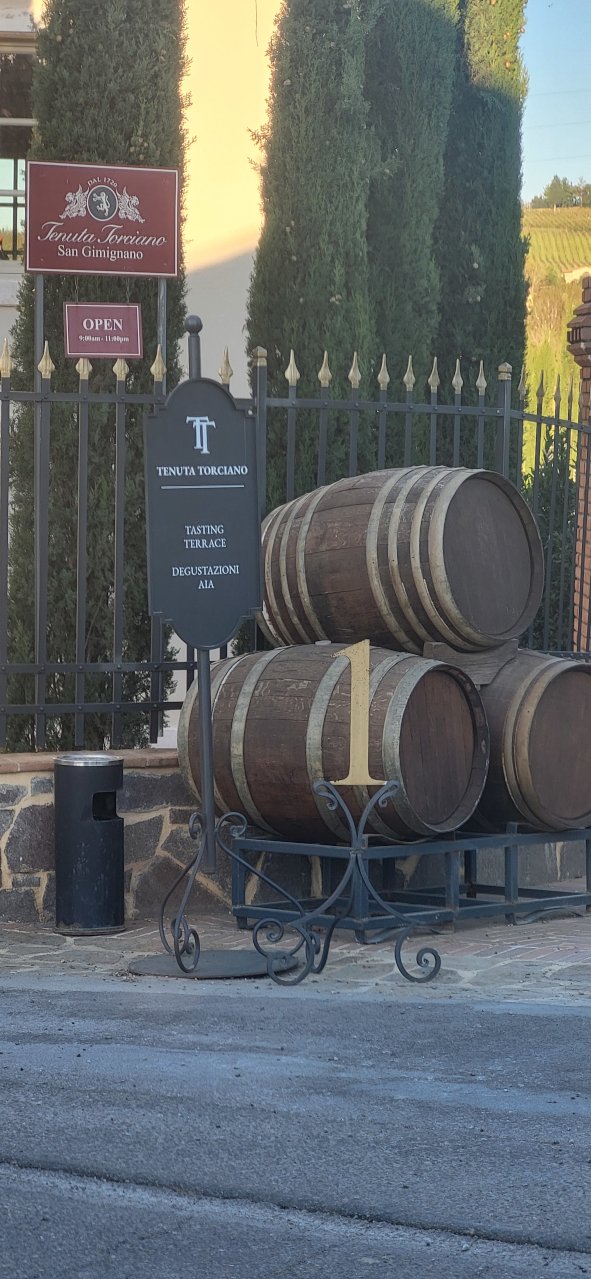
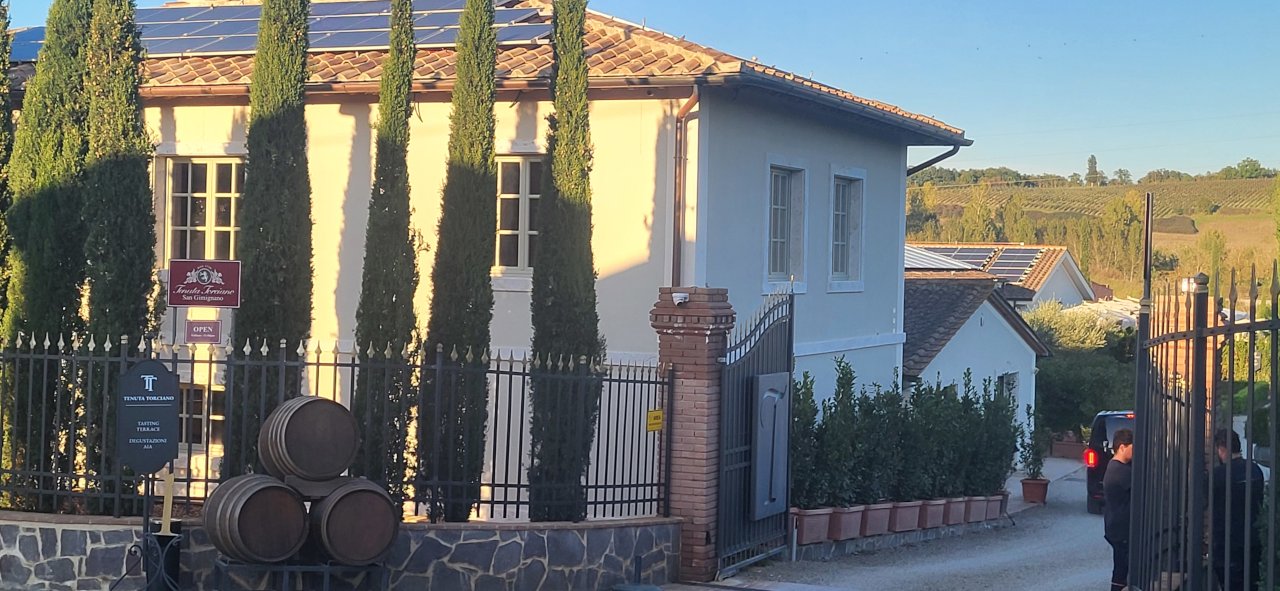
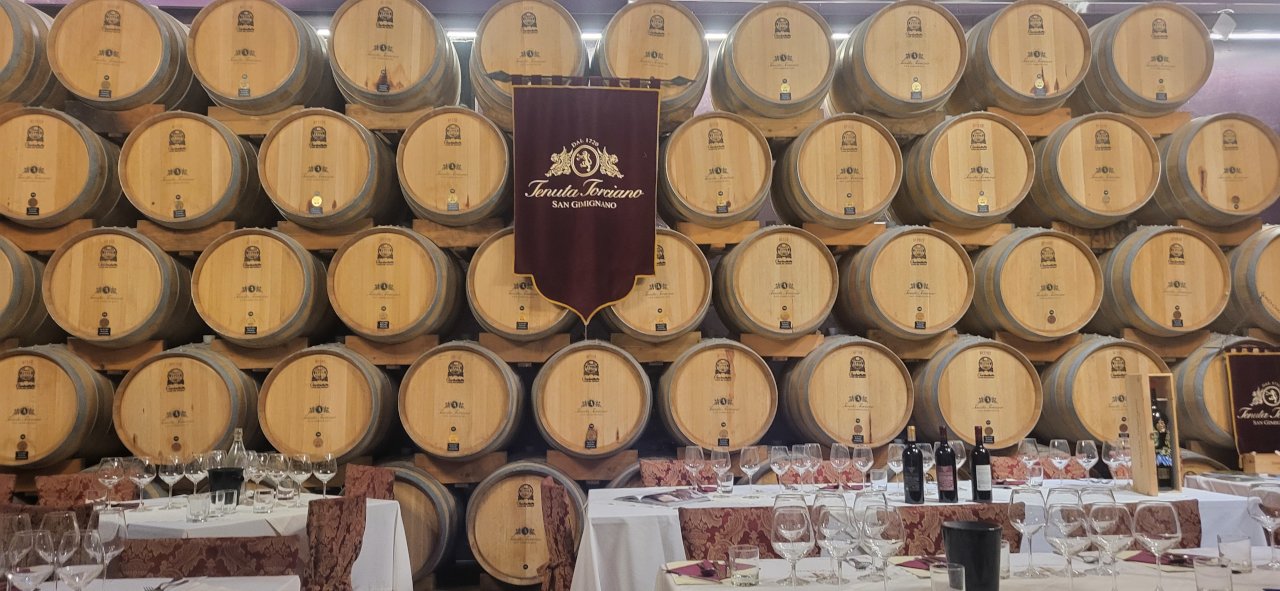
A friend who helps us bottle our wine gave us a voucher for a free night’s stay at a winery hotel in Tuscany. This was too good to pass up, so we set up a two-night stay, including a structured wine tasting, at Tenuta Torciano in the village of Ulignano near San Gimignano.
The small hotel had eight really nice rooms that looked out over the vineyards. The winery is set up to host a lot of wine tasters; we found out later that they serve up to 200,000 tasters a year. The family has been in the wine business for 13 generations, about 300 years. In the last ten years or so they have devoted their 120 employees to increasing direct sales to the USA, and are now also focusing on Singapore and South Korea. They have a warehouse in the USA from which they ship wine directly to customers. It has proved to be a successful business model.
Our host asked if I had a bottle of Willamette Valley Pinot Noir after I mentioned that we own a small winery. I had one in the car. He had visited the Willamette Valley many times and organized tastings of Tenuta Torciano wines for direct sales in Oregon! Small world.
They make a wide variety of wines but specialize in “Super Tuscans”. We tasted a variety of wines, but at the time I thought I could not taste much flavor. Little did I realize that Cindy and I were coming down with colds. I could not get much flavor from the reds, but my developing cold did not seem to diminish the flavor of the whites. I bought a bottle of their “Goldwine”, made from the ancient Vernaccia grape, which is believed to date from the time of the Greeks and Romans and was documented as Vernaccia di San Gimignano as early as 1276. It had citrus and tropical fruit flavors and nice acidity.
Teruzzi
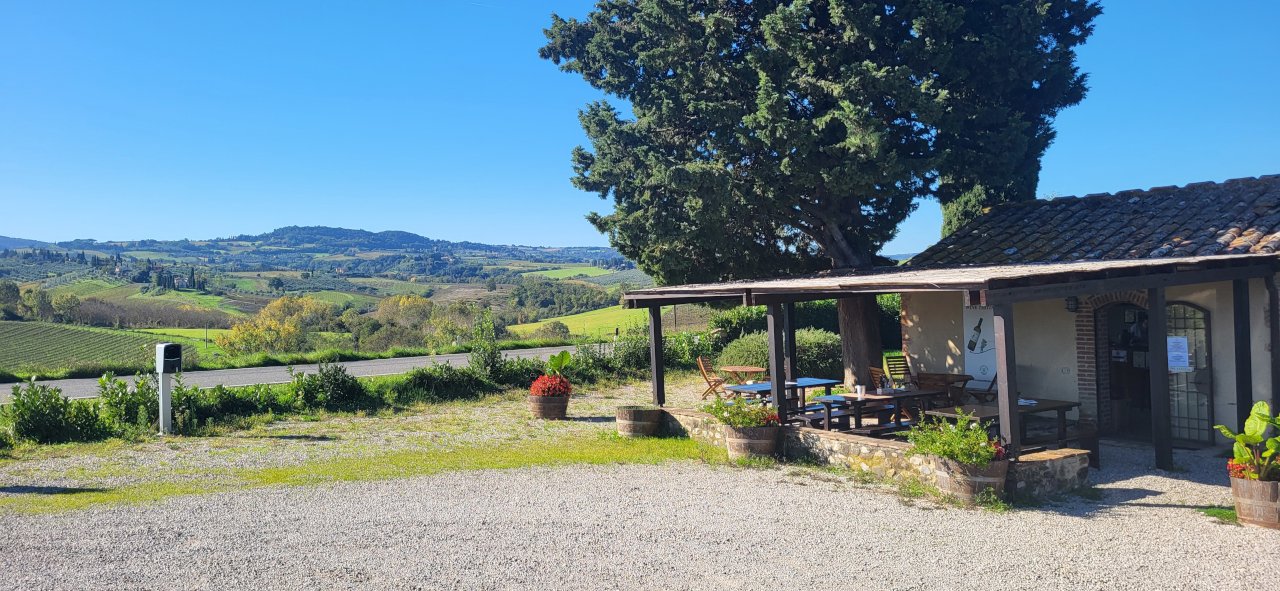
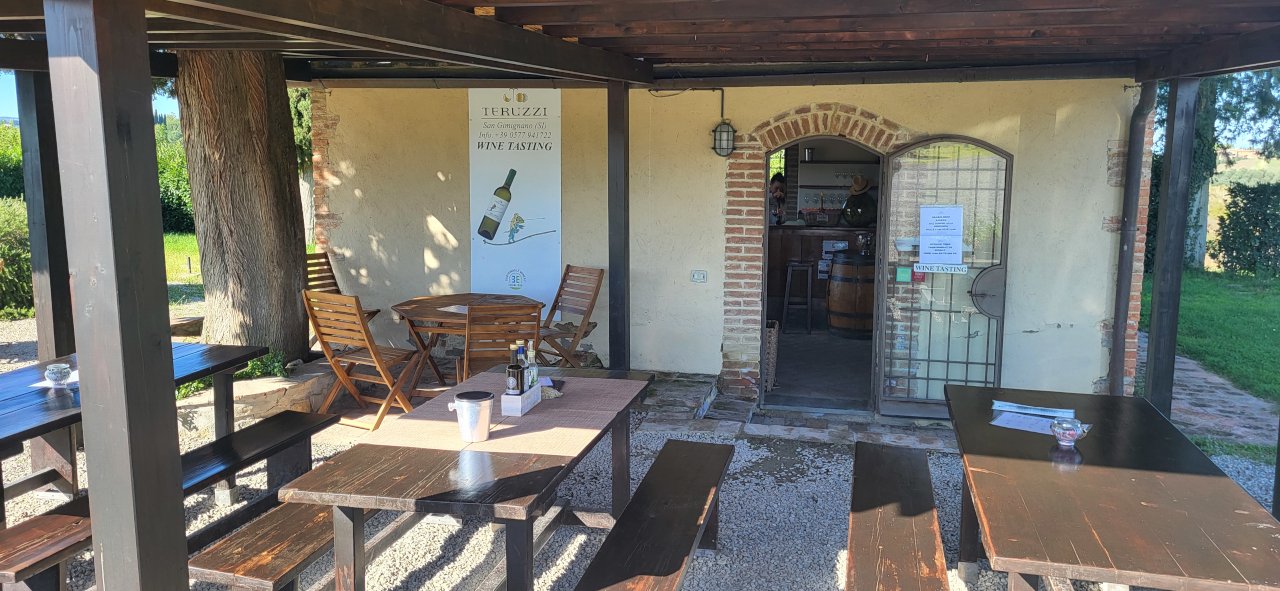
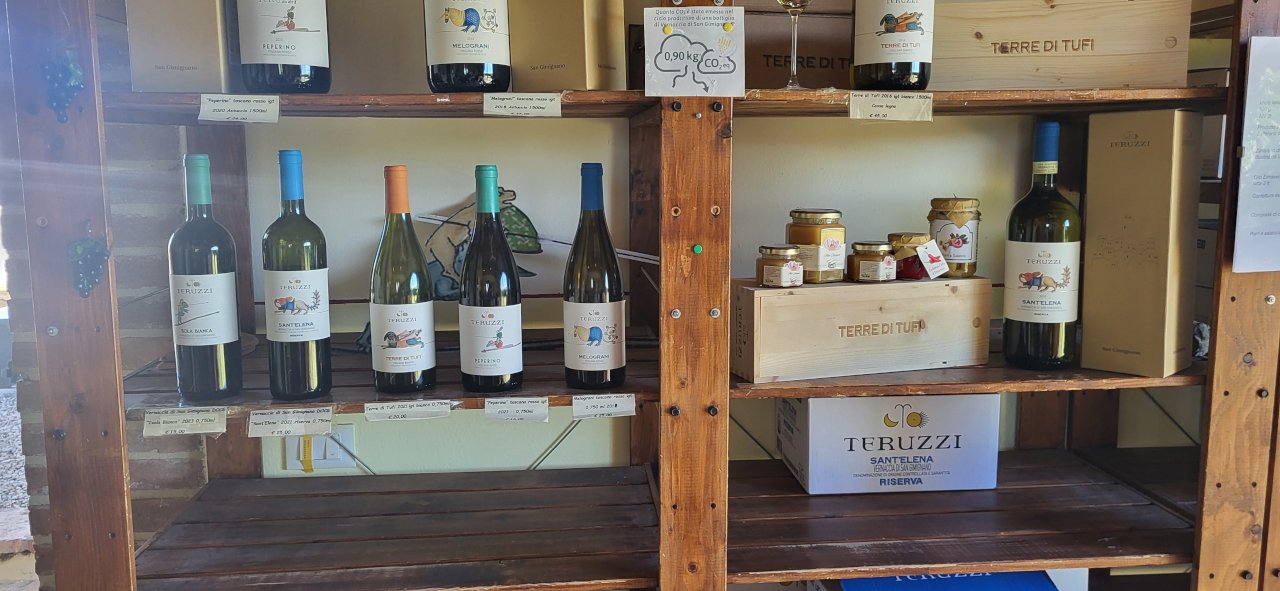
Our colds made wine tasting difficult. We stopped at the Teruzzi winery on the outskirts of San Gimignano. The modest winery was started in 1974 by Enrico Teruzzi, and in 2016 Terra Moretti purchased it. We tasted a nice Vernaccia and several reds, and got a bottle of “Peperino”, which is 60% Sangiovese and 40% Merlot. But we were having a hard time evaluating the wines. We felt bad and realized we could not continue our wine exploration, so we decided to drive two or three hours to Cinque Terre on the coast, find a nice place to stay and try to recover.
Cinque Terre
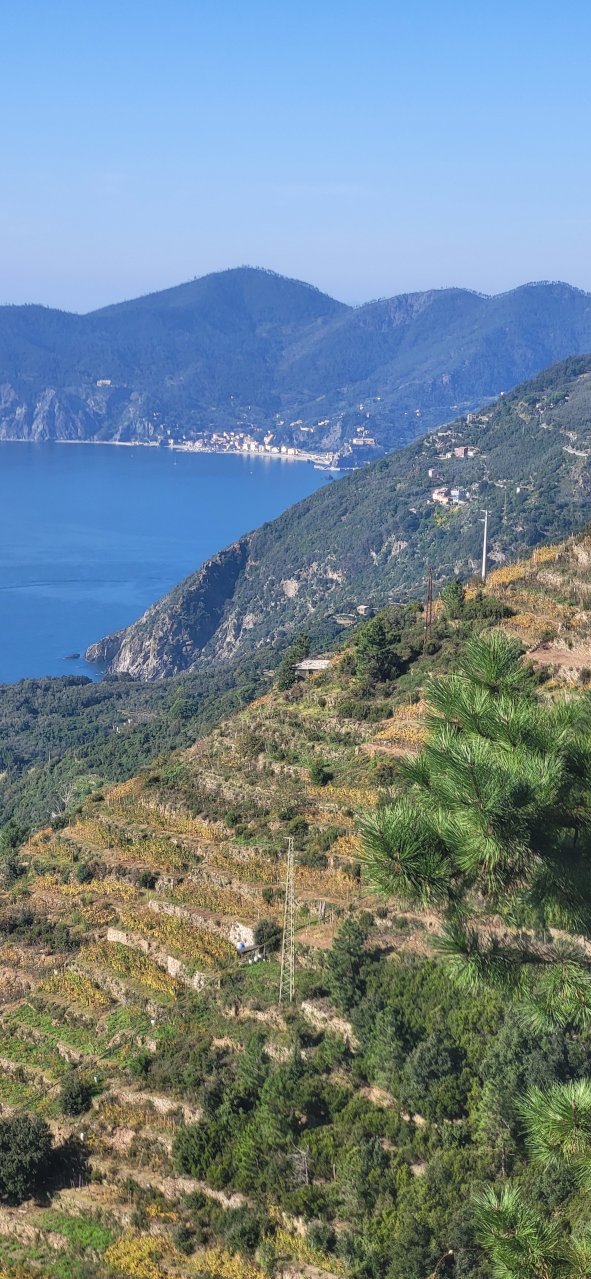
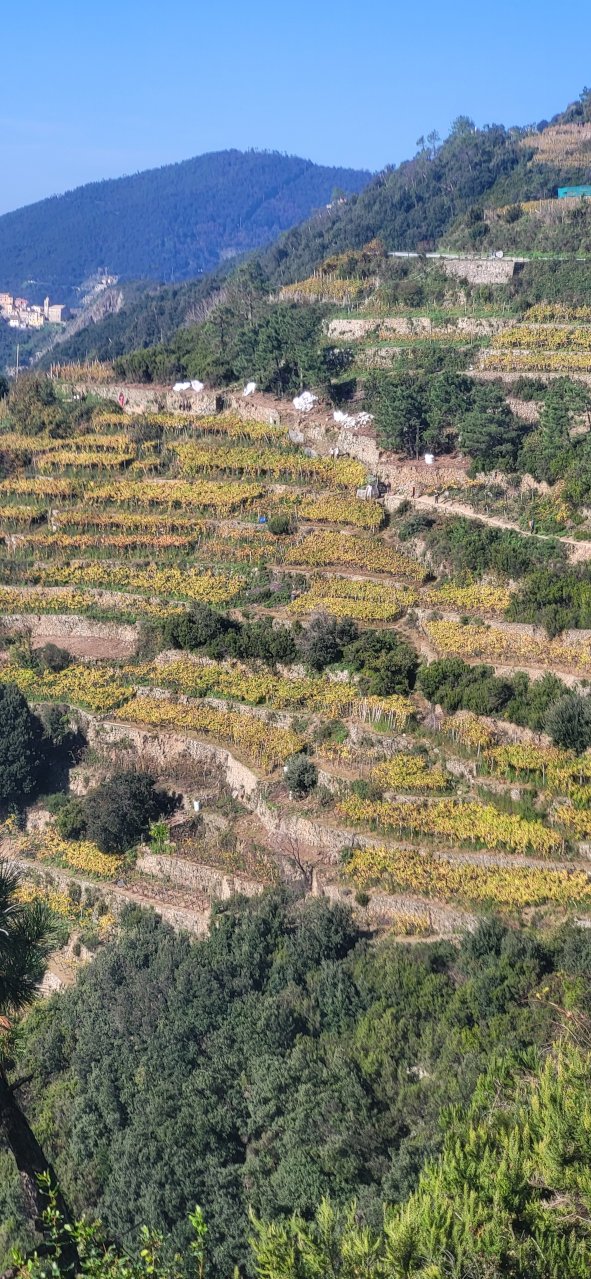
We were disappointed that we were not able to explore more wines. Cinque Terre has many terraced vineyards that start at sea level and climb several thousand feet up the slopes. Some are so steep that you could fall off the vineyard and die. Some vineyards have the designation of a “heroic vineyard”: we found that any vineyard with a slope of 30% or more is called heroic because of the difficulty of farming such steep slopes.
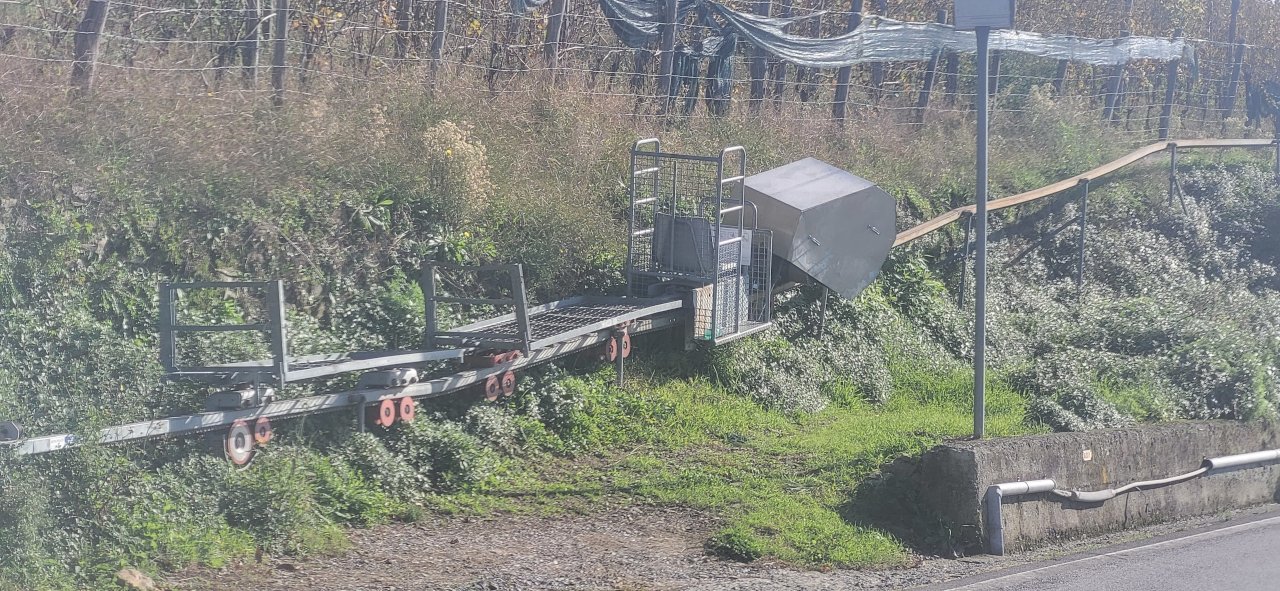
We noticed an unusual contraption by the side of the road next to some vineyards that looked a bit like a very small train attached to a pipe. After talking with some locals, we found out that it was a modest monorail with cogs that let it travel up very steep slopes. One person steers behind the motor, and little cars or bins filled with grapes follow along behind. It seemed very risky on the steep slopes, but it was commonplace.
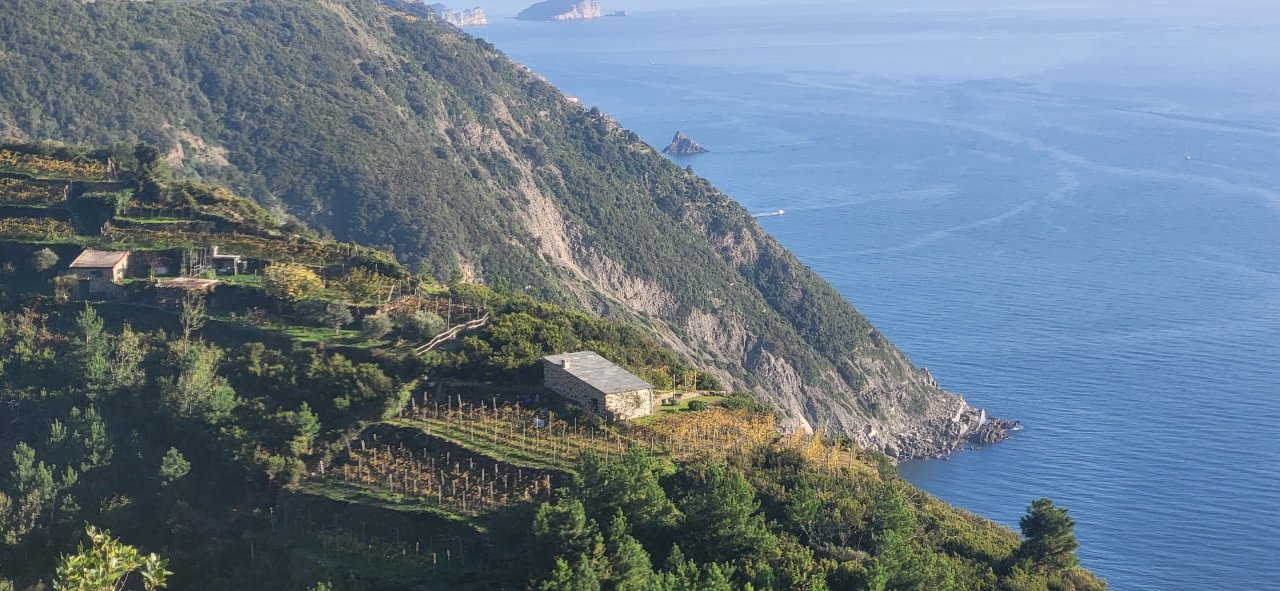
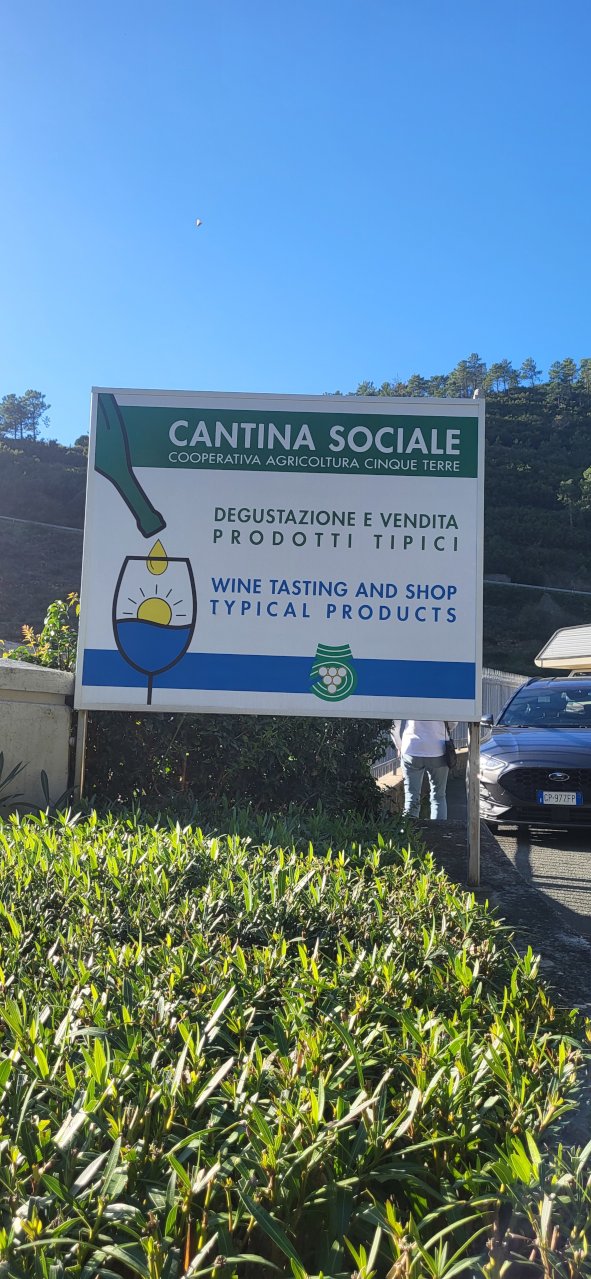
On our last day in Cinque Terre we stopped at a wine co-op near Riomaggiore and tried their wine. We could not taste much, but found out that the co-op, Cantina Cinque Terre Società Agricola Cooperativa Riomaggiore, has over 200 vineyard contributors with a total vineyard area of 46 hectares. The tasting host said they did not grow red grapes, so we tried three Vernaccias and settled on a 2023 “Costa da Posa” to take home, realizing that we might be surprised later because of our altered olfactory senses.
We were able to taste Sciacchetrà. This is a late-harvest dessert wine made only from grapes grown on the lowest terraces next to the Mediterranean Sea. The very ripe grapes are placed on racks in sheds to dry out and lose water. After a month or more, the grapes are pressed and the juice is fermented. It is aged for several years before being sold and can age for 30 years or more.
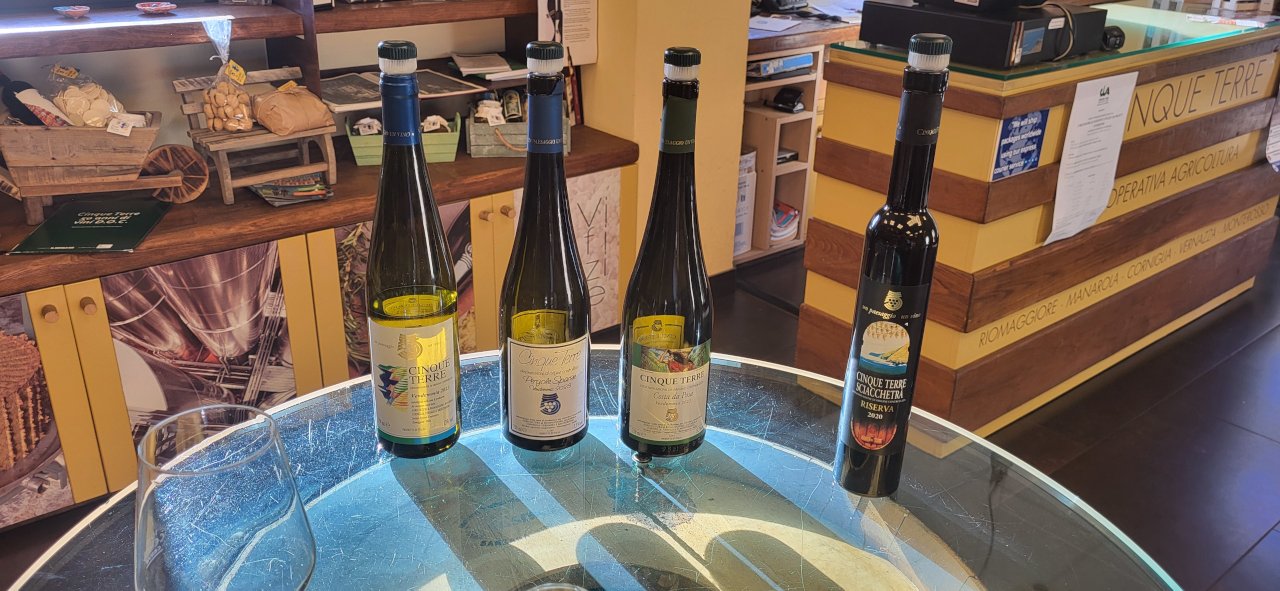
The taste was phenomenal. It was clearly the best wine we tasted, in spite of our colds. It tasted a bit like hazelnuts and was almost as sweet as honey. We have never tasted a wine like this. It resembled a Trockenbeerenauslese in style, but with a completely different flavor profile. The cost? 80 euros for a half bottle!
So our wine adventure ended on a high note in spite of our colds. The wines are safely home in our cellar, and it will be an adventure tasting them, this time without a cold.
More from the trip